Gold has this peculiar ability to feel both timeless and intensely personal. A ring might look simple on the surface, yet every karat choice, alloy tone, and finish carries a story about taste, priorities, and how someone wants their jewelry to live with them.
This space explores gold the way a thoughtful buyer actually encounters it: not as a commodity chart or a flashy showroom pitch, but as a long term companion to diamonds, weddings, milestones, and everyday moments. Whether you are weighing rose gold against classic yellow, wondering how gold affects diamond sparkle, or simply trying to avoid costly mistakes, the notebook approach keeps things practical, reflective, and just a little curious.
What is the Gold Notebook?
The Gold Notebook is a place for slowing down your thinking about gold before making decisions that tend to last decades. Gold jewelry often gets chosen quickly, sometimes based on habit or trend, yet the metal itself shapes how a ring feels, ages, and visually supports the diamond. This notebook idea is about collecting observations, practical insights, and quiet details that rarely make it into flashy buying guides.
It also serves as a running conversation about balance. Purity versus durability, warmth versus neutrality, tradition versus personal taste. Gold is never just one thing. Even two rings labeled 18K can behave differently depending on alloy mix, finish, and how they are worn. The goal here is not to prescribe one correct choice but to help you recognize what matters most for your specific situation.
Finally, The Gold Notebook treats gold as part of a larger story rather than a standalone purchase. Engagement rings, wedding bands, anniversary upgrades, and heirloom pieces all interact over time. Understanding gold in that broader context helps avoid mismatches later and often leads to choices that feel calmer, more intentional, and ultimately more satisfying to live with every day.
Understanding Gold Purity: 10K, 14K, 18K and Beyond
Gold purity is measured in karats, which tell you how much actual gold is present in a piece of jewelry compared with other strengthening metals. Pure gold is 24 karat, but it is rarely used for rings because it bends easily. Instead, alloys are created by blending gold with metals like copper, silver, palladium, or nickel. This improves durability while also influencing color and feel.
10K gold contains about 41.7 percent pure gold. It is the most durable common jewelry option and often the most budget friendly. Some people prefer it for everyday wear because it resists scratches and dents better than higher karat options. The tradeoff is a slightly less rich color and a lower intrinsic gold content, which can matter to those who value tradition or resale potential.
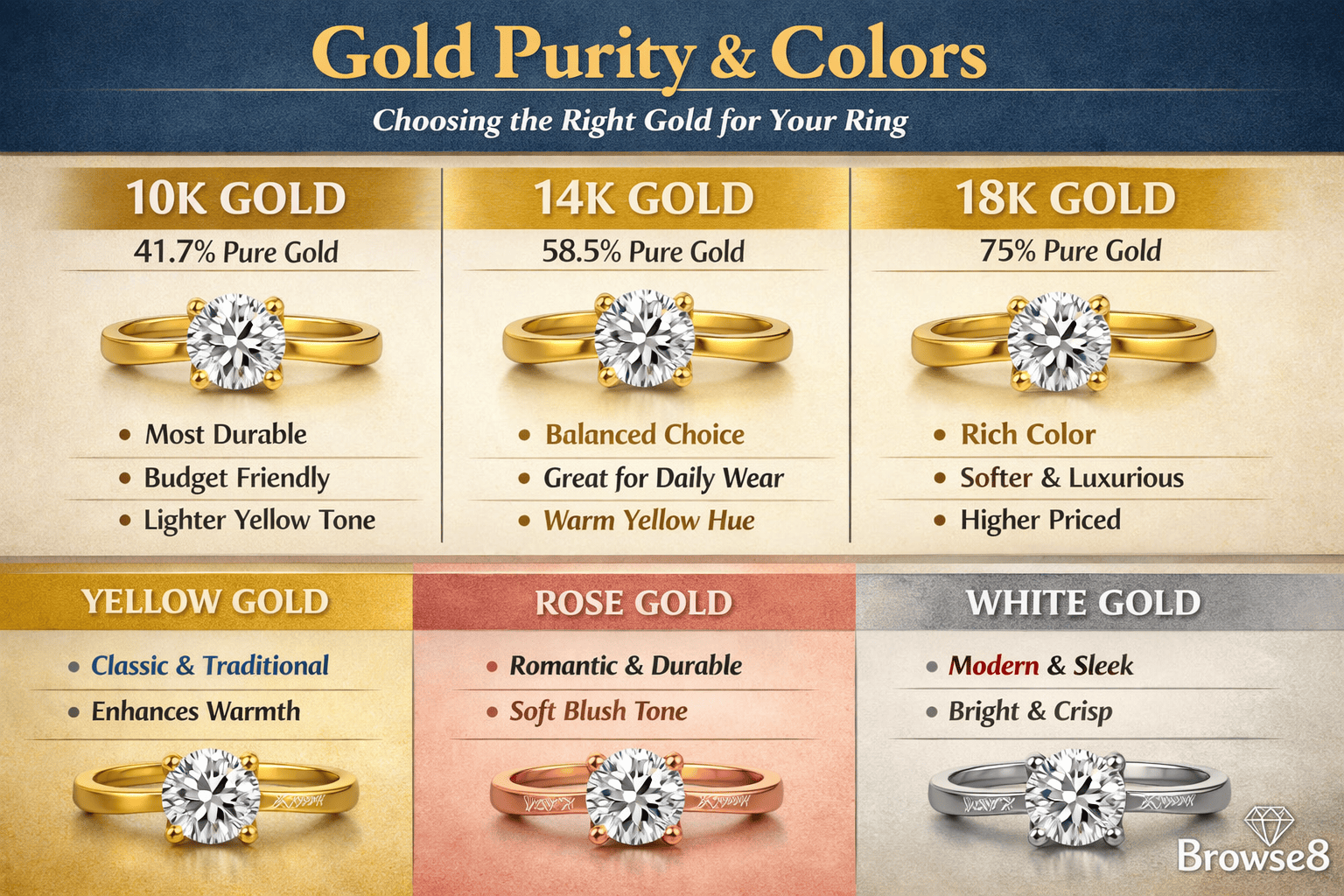
14K gold sits comfortably in the middle at roughly 58.5 percent pure gold. Many jewelers consider it the practical sweet spot. It keeps a warm gold appearance while still holding up well under daily use. Engagement rings, wedding bands, and diamond settings are frequently made in 14K because it balances beauty, strength, and long term maintenance.
18K gold moves closer to luxury territory with about 75 percent pure gold. The color becomes richer and more saturated, especially in yellow and rose gold alloys. Some buyers choose 18K specifically for its deeper tone and prestige feel. The metal is softer than 14K, but when crafted well, it still performs reliably for rings meant to be worn often. Beyond that, very high purity options exist in certain cultures, yet for diamond jewelry, 10K through 18K remain the most widely trusted range.
Color Spectrum in gold: From Yellow to Rose and White
Gold does not come in a single color, even though it often gets discussed that way. The familiar yellow tone is the result of a balanced alloy that keeps gold visually dominant while adding strength. Yellow gold tends to highlight warmth and tradition. It pairs especially well with diamonds that have a hint of color, often making them appear more inviting rather than stark.
White gold shifts the personality entirely. By blending gold with pale metals like palladium or nickel and then finishing it with rhodium plating, white gold takes on a cooler, brighter appearance. This makes diamonds appear whiter and more contrast heavy. Many people choose white gold for its clean, modern look, though it does require occasional replating to maintain that crisp finish.
Rose gold introduces copper into the alloy, creating its soft pink hue. The tone can range from subtle blush to deeper rose depending on the copper content. Rose gold tends to feel warm and organic rather than flashy. It also has practical benefits. The copper content adds strength, making it surprisingly durable for everyday wear.
Browse8 has a particular fondness for rose gold, and it is not just aesthetic. Rose gold interacts beautifully with diamonds across a wide range of color grades, often making stones appear brighter without forcing them toward icy whiteness. It flatters many skin tones, feels timeless without being rigid, and ages gracefully. Over time, rose gold develops a character rather than losing one, which aligns well with how rings are actually lived with, not just admired on day one.
How Gold Tone Affects Diamond Appearance
Gold tone quietly influences how a diamond is perceived, often more than people expect. Yellow and rose gold introduce warmth around the stone, which can make slightly tinted diamonds appear more harmonious and less noticeably off white. This is why diamonds in the near colorless range often look perfectly bright when set in warmer metals, even if they might show a hint of color in a stark white setting.
White gold, on the other hand, tends to emphasize contrast. Its cool reflective surface can make a diamond appear crisper and whiter, especially under bright lighting. That effect works beautifully for higher color grades but can also reveal subtle warmth in lower color grades more easily. Some buyers appreciate this clarity, while others prefer the softer blending effect of yellow or rose gold.
Beyond color grading, the overall mood of the ring changes with metal tone. Warm metals create a cohesive glow where diamond and band feel like a single composition. Cooler metals highlight the diamond as the visual centerpiece. Neither approach is objectively better. The key is deciding whether you want the diamond to integrate gently with the setting or stand out with maximum contrast.
Strength, Wearability and Everyday Life
Gold jewelry lives in the real world, not display cases, so strength matters more than people initially expect. Rings encounter door handles, gym equipment, keyboards, dishwashing, sudden temperature changes, and all sorts of tiny daily collisions. Lower karat gold such as 10K or 14K tends to hold its shape better under this routine friction because of the higher proportion of strengthening alloy metals.
That said, durability is not only about karat number. Ring design plays a huge role. Thin bands, sharp edges, and intricate pavé settings can make even higher karat gold perform reliably if engineered well. Conversely, a poorly constructed setting can struggle regardless of purity. Wearability comes from the combination of alloy, craftsmanship, and how the ring fits into your lifestyle.
Comfort is another factor that often gets overlooked. Some people work with their hands constantly, others spend long hours typing, traveling, or exercising. A slightly thicker 14K band may provide reassurance for active lifestyles, while 18K gold might appeal more to someone prioritizing color richness over maximum toughness. The goal is alignment with daily habits rather than abstract perfection.
Maintenance expectations should also be realistic. Gold scratches. All gold does. These marks are usually superficial and can often be polished out during routine servicing. Accepting this early helps avoid unnecessary disappointment. A ring that shows gentle signs of life often feels more authentic than one kept artificially pristine.
Ultimately, wearability is about peace of mind. When a ring fits comfortably, resists normal wear, and aligns with how you live, you stop thinking about protecting it constantly. That is when jewelry becomes what it is meant to be: a natural extension of daily life rather than an object requiring continuous caution.
Common Misconceptions about Gold
One of the most common misconceptions about gold is that higher karat always means better. While higher purity does increase gold content and deepen color, it also makes the metal softer. For rings worn daily, this tradeoff is not always desirable. Many people end up happier long term with 14K gold because it balances beauty with resilience rather than maximizing purity for its own sake.
Another widespread belief is that white gold is naturally white. In reality, most white gold appears bright because it is coated with rhodium. Over time, that plating wears down and reveals the warmer tone beneath. This is not a flaw, but it does mean white gold requires maintenance. Understanding this upfront helps set realistic expectations and avoids confusion later.
There is also a misconception that rose gold is trendy or short lived. Rose gold has existed for centuries and continues to reappear because of its flattering tone and durability. Its warmth adapts well across different eras and styles. Rather than being a passing fashion, rose gold tends to cycle quietly back into favor because it simply works, both visually and practically.
Tools for Choosing the Right Gold for Your Ring
Choosing the right gold often starts with a simple self check rather than technical specs. Think about how often you plan to wear the ring, what kind of activities fill your typical day, and how much maintenance you realistically want to deal with. These questions quietly narrow the field. Someone who works with their hands daily may lean toward durability, while someone prioritizing color richness might accept a little extra care.
Visual preference is the next powerful tool. Try looking at diamonds in different gold tones rather than imagining the outcome. Yellow, white, and rose gold each change how sparkle, contrast, and warmth are perceived. Seeing this directly helps cut through assumptions and marketing language. What feels balanced on your hand usually becomes the right answer faster than theoretical comparisons.
Budget alignment also matters, but not always in the way people expect. Slight adjustments in karat or alloy choice can free resources for diamond quality or setting design. Thinking holistically about the ring rather than isolating gold purity often produces a more satisfying overall result. It keeps the focus on harmony instead of chasing one specification.
Finally, trust your long term instinct more than short term excitement. Rings are lived with, not just admired on purchase day. When the gold tone, durability, and overall feel match your lifestyle naturally, the ring fades into everyday comfort while still holding symbolic weight. That quiet compatibility is usually the clearest sign you chose well.
Resent Comments